Tag: Crypto Risks

  • Stablecoin Depeg: What does it mean?

    Stablecoin Depeg: What does it mean?

    Stablecoins are designed to maintain a stable value. For example, a US dollar-backed stablecoin aims to stay close to $1. This stability makes stablecoins useful for crypto trading, transferring funds, and holding digital assets without being directly exposed to the price movements of cryptocurrencies like Bitcoin.

    However, stablecoins do not always maintain their intended value.

    Sometimes, a stablecoin trades below or above its target price. This situation is known as a stablecoin depeg.

    But why does it happen? Can a stablecoin lose its value completely? And what should users understand before holding one? Let’s explore.

    What is a Stablecoin Depeg?

    A stablecoin depeg happens when a stablecoin moves away from the value it is designed to maintain.

    For example, a US dollar-backed stablecoin generally aims to trade at $1. If its market price falls to $0.95, it is trading below its intended peg. If it rises to $1.05, it is trading above the peg.

    A small price difference does not always mean a serious problem. Temporary changes can happen because of market demand, liquidity, or trading activity.

    However, a significant or prolonged depeg can indicate deeper concerns about the stablecoin’s reserves, redemption process, or overall market confidence.

    Why do Stablecoins lose their Peg?

    There is no single reason behind every stablecoin depeg. Several factors can affect a stablecoin’s ability to maintain its target value.

    1. Problems With Reserve Backing

    Some stablecoins maintain their value through reserves such as cash, bank deposits, or short-term government securities.

    If users begin to question whether the issuer holds enough suitable reserves, confidence may fall. This can lead to heavy selling and a drop in the stablecoin’s market price.

    2. Heavy Selling Pressure

    Stablecoins depend partly on market confidence and demand.

    When many holders try to sell or exchange a stablecoin at the same time, selling pressure can push its market price below the intended value.

    This can become more serious when buyers are unwilling to purchase the stablecoin at its target price.

    3. Liquidity Problems

    Liquidity refers to how easily an asset can be bought or sold without significantly affecting its price.

    If a stablecoin has limited liquidity on exchanges or decentralised platforms, even a relatively large trade can move its price.

    During periods of market stress, liquidity can become weaker and make it harder for the stablecoin to return to its peg.

    4. Algorithmic Mechanism Failure

    Not every stablecoin uses traditional reserves.

    Some algorithmic stablecoins rely on software, token supply adjustments, or relationships with other crypto assets to maintain their target value.

    If the mechanism cannot respond effectively to market pressure, the stablecoin may lose its peg. In some cases, confidence can collapse quickly.

    5. Banking or Regulatory Uncertainty

    Stablecoin issuers may depend on banks, payment providers, and financial institutions to manage reserves and process transactions.

    Concerns about banking partners, withdrawal restrictions, regulatory action, or the issuer’s ability to redeem tokens can affect market confidence.

    As a result, holders may rush to sell, putting pressure on the stablecoin’s price.

    A Real Example: The USDC Depeg in 2023

    In March 2023, USD Coin (USDC) temporarily lost its $1 peg after Circle, its issuer, disclosed that a portion of its reserves was held at Silicon Valley Bank.

    The bank’s failure created uncertainty about access to those reserves. As a result, USDC faced selling pressure and traded below $1 on several crypto markets.

    After the situation became clearer and confidence returned, USDC moved back towards its intended value.

    This event showed how concerns about banking relationships and reserve access can affect even widely used stablecoins.

    What happens when a Stablecoin Depegs?

    A stablecoin depeg can affect different participants across the crypto market.

    • Holders: People holding the stablecoin may see its market value fall below the intended price.
    • Traders: A depeg can affect trading pairs, portfolio values, and open positions.
    • DeFi users: Lending, borrowing, and liquidity pools may face additional risks when a stablecoin loses its peg.
    • Businesses: Companies accepting stablecoins may face uncertainty when converting them into traditional currencies.

    The impact depends on how far the stablecoin moves from its peg, how long the situation continues, and how the issuer responds.

    How can users evaluate Stablecoin risks?

    No stablecoin is completely risk-free. Before holding or using one, consider these points:

    1. Understand its backing: Check whether the stablecoin uses cash, government securities, crypto collateral, or an algorithmic mechanism.
    2. Review reserve information: Look for regular reserve reports and independent attestations or audits, where available.
    3. Understand redemption rules: Check whether holders can redeem tokens directly with the issuer and what conditions apply.
    4. Check market liquidity: Review trading activity and available liquidity across exchanges.
    5. Follow official updates: Pay attention to announcements from the issuer and relevant financial institutions.
    6. Avoid relying on one stablecoin: Holding all funds in a single stablecoin can concentrate your exposure to its specific risks.

    These checks can help users understand potential risks, but they cannot guarantee that a stablecoin will always maintain its peg.

    Final Thoughts

    Stablecoins aim to reduce the price volatility commonly associated with cryptocurrencies. However, their stability depends on factors such as reserve quality, liquidity, market confidence, and the mechanism used to maintain their value.

    A stablecoin depeg is a reminder that the word stable does not mean risk-free.

    Before choosing a stablecoin, understand how it works, what supports its value, and how users can redeem it. In crypto, understanding the risks is just as important as understanding the technology.
  • How Stablecoins Can Lose Their Peg: Understanding the Risks

    How Stablecoins Can Lose Their Peg: Understanding the Risks

    Stablecoins are designed to maintain a stable value. Most aim to stay close to a specific currency, such as the US dollar. For example, a dollar-pegged stablecoin aims to maintain a value of around $1.

    Many crypto users rely on stablecoins to trade, transfer funds, and hold value without moving in and out of traditional currencies. However, stablecoins are not risk-free. Under certain conditions, they can lose their intended value. This event is known as a stablecoin depeg.

    Understanding why a stablecoin depegs can help users make more informed decisions in the crypto market.

    What is a Stablecoin Peg?

    A peg is a target exchange value that a stablecoin aims to maintain.

    For example, a stablecoin pegged to the US dollar aims to keep its value close to $1. Ideally, one token should be redeemable for one US dollar, subject to the issuer’s terms and conditions.

    However, the market price can move above or below that target.

    • At $1: The stablecoin is trading close to its intended peg.
    • Below $1: The stablecoin is trading at a discount.
    • Above $1: The stablecoin is trading at a premium.

    A small price movement does not always indicate a serious problem. However, a larger or prolonged deviation may signal concerns about the stablecoin’s reserves, redemption process, liquidity, or market confidence.

    What does it mean when a Stablecoin Depegs?

    A stablecoin depegs when its market value moves away from the currency or asset it is designed to track.

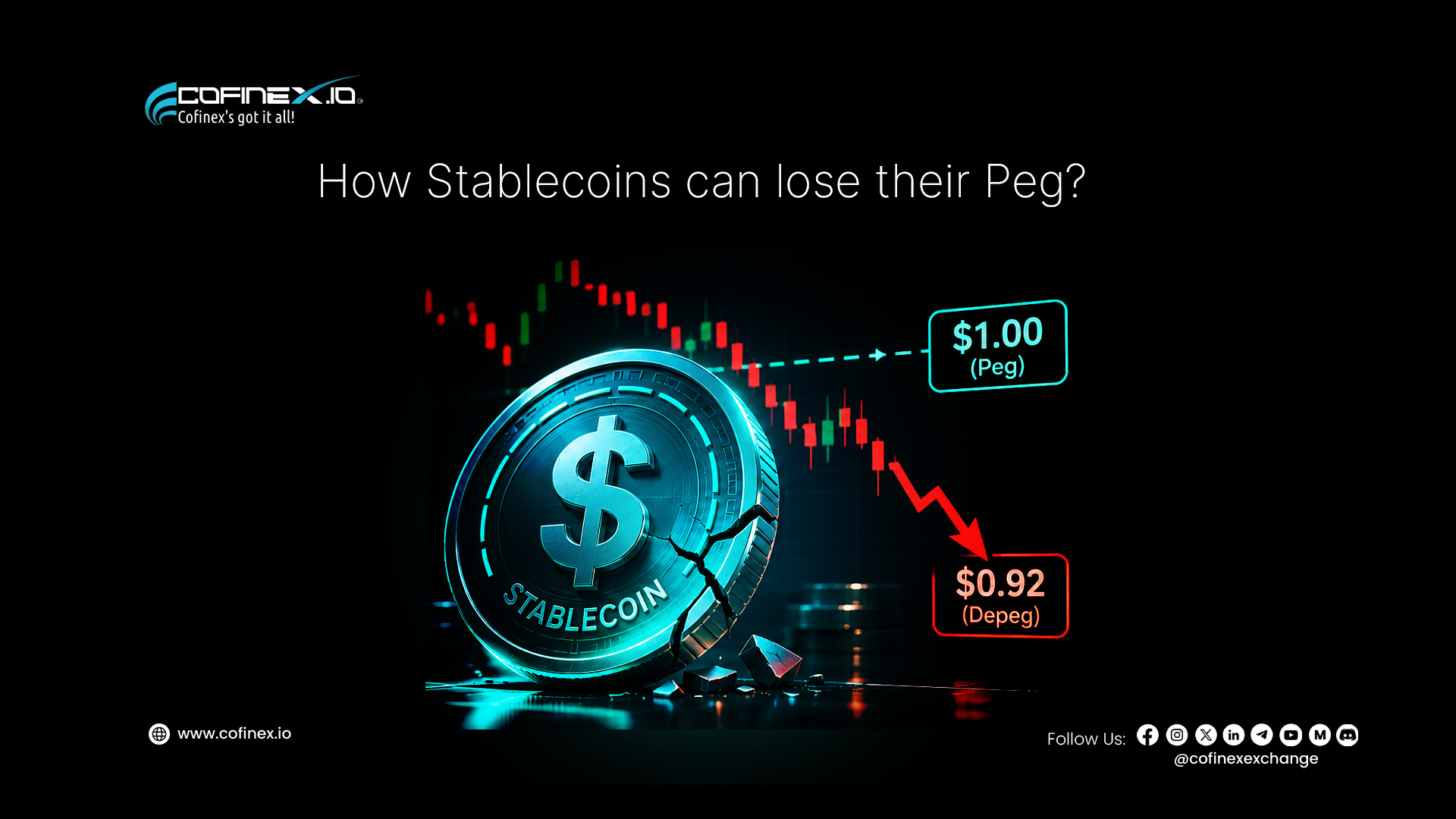
    For example, imagine a dollar-pegged stablecoin starts trading at $0.92 instead of $1. This means users are paying less than one dollar to acquire a token that aims to maintain a one-dollar value.

    A temporary deviation may happen because of limited liquidity or sudden market activity. However, a severe depeg can create uncertainty about whether holders can redeem their tokens at the intended value.

    Why can Stablecoins lose their Peg?

    Stablecoins use different mechanisms to maintain their value. As a result, the reasons behind a depeg can vary.

    1. Problems With Reserve Backing

    Fiat-backed stablecoins generally rely on reserves such as cash, bank deposits, or short-term government securities.

    If users lose confidence in the quality, availability, or transparency of these reserves, they may rush to sell their tokens or request redemption.

    For example, concerns about a reserve-holding bank could make users question whether the issuer can meet redemption requests. This uncertainty can push the stablecoin’s market price below its target.

    2. Sudden Increase in Selling Pressure

    Stablecoins depend partly on market confidence and liquidity.

    When a large number of holders try to sell at the same time, the available buyers may not be enough to absorb the selling pressure at the target price.

    Consequently, the token may trade below its peg, especially on exchanges or trading pools with limited liquidity.

    3. Liquidity Problems

    Liquidity refers to how easily an asset can be bought or sold without significantly affecting its price.

    If a stablecoin has low liquidity on a particular exchange or decentralised exchange, even a relatively small trade can move its market price.

    This does not always mean the stablecoin has lost its reserve backing. Sometimes, the problem is limited to a specific trading platform or liquidity pool.

    4. Weaknesses in Algorithmic Mechanisms

    Some stablecoins use algorithms, incentives, or other crypto assets to maintain their target value instead of relying entirely on traditional reserves.

    These systems may encourage users to buy, sell, or exchange tokens when the price moves away from the peg.

    However, if confidence falls sharply or the supporting asset loses value, the mechanism may fail to restore the peg. This can create a cycle of falling prices and further selling pressure.

    5. Smart Contract or Technical Failures

    Many stablecoins operate through blockchain-based smart contracts.

    A software vulnerability, exploit, network disruption, or technical failure can affect token transfers, collateral management, or redemption processes.

    Such incidents can reduce user confidence and create uncertainty about whether the stablecoin will continue to function as intended.

    6. Regulatory or Banking Uncertainty

    Stablecoin issuers may depend on banks, payment providers, custodians, and regulatory approvals.

    If a banking partner faces difficulties or regulators introduce restrictions, users may become concerned about access to reserves and redemption services.

    Even when the underlying reserves remain intact, uncertainty can affect market confidence and the stablecoin’s trading price.

    Real-World Example: The USDC Depeg in 2023

    In March 2023, USD Coin (USDC) temporarily lost its one-dollar peg after Circle disclosed that a portion of its reserves was held at Silicon Valley Bank, which had been closed by US regulators.

    The news created uncertainty among holders. Some traders rushed to sell USDC, and its market price fell below $1 on several trading platforms.

    After authorities announced measures to protect depositors and Circle confirmed access to its reserves, confidence improved. USDC subsequently returned close to its intended peg.

    This event showed that even a widely used, reserve-backed stablecoin can face market pressure when users question the safety and accessibility of its reserves.

    What happens when a Stablecoin loses its Peg?

    A depeg can affect different participants across the crypto market.

    • Holders: Users may see the market value of their stablecoin holdings fall.
    • Traders: Trading pairs and portfolios that rely on the stablecoin may face unexpected losses.
    • DeFi users: Lending, borrowing, and liquidity pool positions may become exposed to additional risk.
    • Exchanges: Platforms may experience unusual trading activity, wider spreads, or temporary service restrictions.
    • Businesses: Companies using stablecoins for payments or settlements may face uncertainty around the value of incoming funds.

    The impact depends on how far the stablecoin moves from its peg, how long the deviation lasts, and whether users can access redemption services.

    How can users evaluate Stablecoin risks?

    No stablecoin is completely free from risk. However, users can review several factors before relying on one.

    1. Check reserve information: Review the issuer’s reserve disclosures and independent assurance reports.
    2. Understand redemption rules: Check who can redeem tokens, how the process works, and whether any restrictions apply.
    3. Review liquidity: Look at trading activity and liquidity across the platforms you use.
    4. Understand the backing model: Learn whether the stablecoin uses fiat reserves, crypto collateral, or an algorithmic mechanism.
    5. Follow issuer updates: Watch for announcements about reserves, banking partners, technical incidents, and regulatory developments.
    6. Avoid relying on one stablecoin: Consider the risks of keeping all your funds in a single stablecoin or platform.

    Final Thoughts

    Stablecoins aim to provide price stability, but their value depends on the mechanisms and systems supporting them. Reserve concerns, liquidity shortages, selling pressure, technical failures, and loss of confidence can all cause a stablecoin to lose its peg.

    Therefore, users should look beyond a stablecoin’s target price. Understanding its backing, redemption process, liquidity, and risks is just as important.

    Remember: A stablecoin is designed to maintain a stable value, but that does not make it risk-free.